“AI Is Making Life Easier — So Why Are We Becoming More Dependent on It?”
From writing and studying to making everyday decisions, AI is becoming part of our daily lives. But where does useful assistance end and dependence begin?
swabira65 · · 4 min read
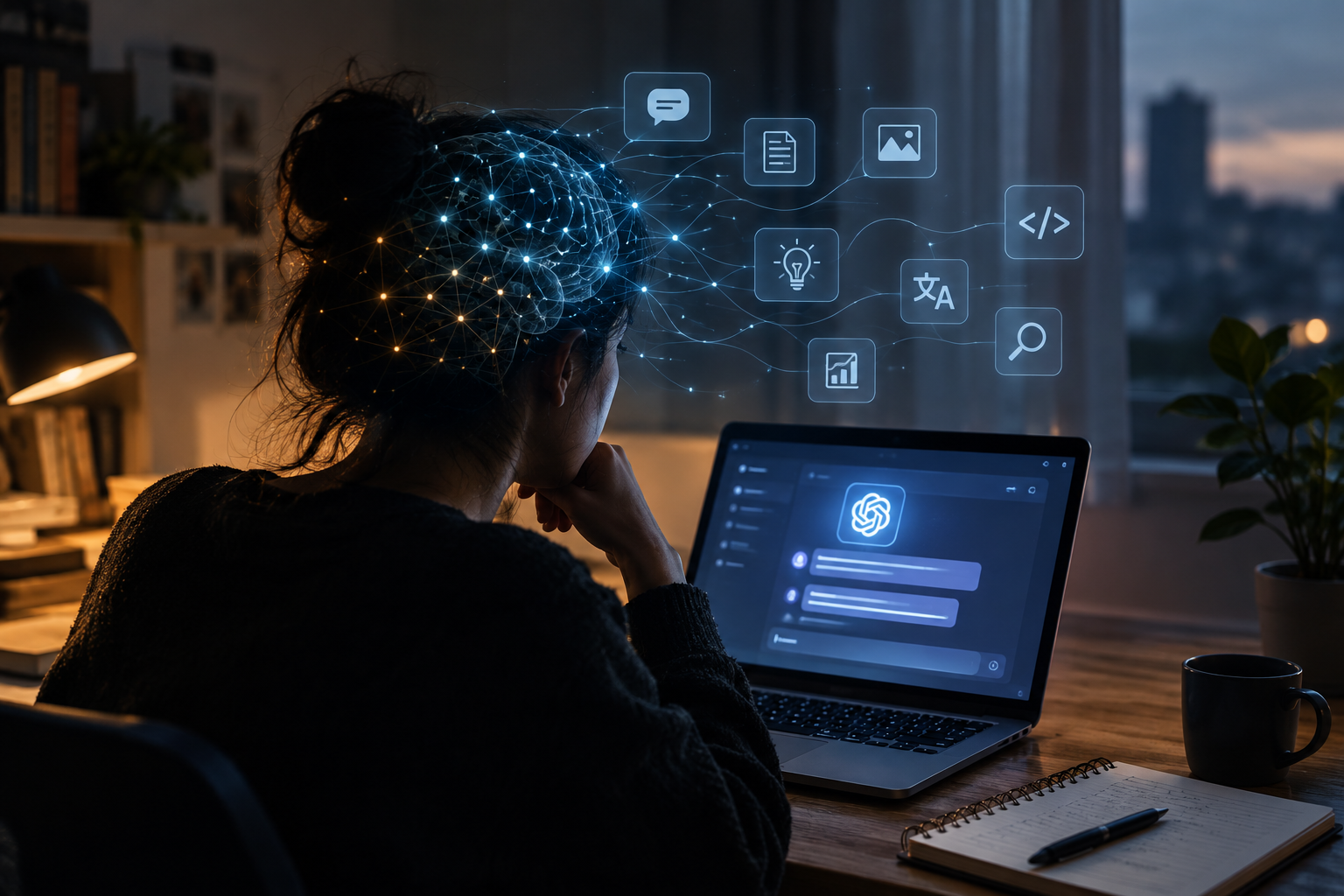
AI Is Making Life Easier. But What Is It Costing Us?
You have an assignment due.
Ten years ago, you'd have spent an hour wrestling with it. Confused. Frustrated. Slowly figuring it out.
Today? You paste it into AI. Ten seconds later, you have an answer. A polished one.
Need ideas? You get ten. Need a rewrite? Done.
It feels like magic.
But here's the question almost nobody is asking:
What happens when convenience becomes dependence?
The Line We Don't Notice Crossing
AI is everywhere now. We use it to write emails, summarize articles, learn new subjects, plan trips, write code, and even make decisions.
Let me be clear: AI is not the enemy. It's one of the most powerful tools humans have ever built.
But there's a difference between two ways of using it:
Using AI to help you think
Letting AI think instead of you
From the outside, they look identical. On the inside, they couldn't be more different.
This Isn't the First Time
Every generation gets a tool that makes something hard feel easy.
Calculators took over the arithmetic. Search engines took over the remembering. GPS took over the navigating.
But AI is different. It doesn't just help you find an answer. It explains, organizes, drafts, and delivers something that looks finished.
So the temptation is new, too:
Why struggle for thirty minutes when you can have the answer in seconds?
Why write a rough draft when AI can write a clean one?
Why brainstorm when you can generate twenty ideas on demand?
The danger isn't that we use these tools.
The danger is that we stop practicing the skills those tools perform for us.
The Convenience Trap
Here's the thing about skills: they work like muscles.
Write often, and you get better at expressing ideas.
Solve problems often, and your reasoning sharpens.
Research often, and you learn to spot what's reliable and what's not.
Skip the practice, and the skill fades. Quietly. Slowly. Without any warning.
That doesn't mean using AI makes you less intelligent.
It means how you use it matters more than whether you use it.
Asking AI to explain a hard concept so you can understand it is learning.
Asking AI to finish the whole task so you never have to understand it is avoiding learning.
Same output. Completely different person at the end.
The Illusion of Understanding
This is the part that worries me most.
AI gives you a beautifully written explanation. You read it. It makes sense. You nod and move on.
But understanding an explanation is not the same as being able to explain it yourself.
Try it. Close the tab and explain the idea out loud, from memory. If you can't, you didn't learn it. You just read it.
A student can submit a perfect assignment and learn nothing from it.
An employee can send a hundred AI-written emails and slowly forget how to write one.
A creator can lean on AI for every idea until their own creativity goes quiet.
A programmer can ship code they couldn't explain.
The tool becomes so convenient that practicing the skill starts to feel pointless.
And that's exactly when it matters most.
But Used Right, AI Is a Superpower
I'm not here to tell you to quit AI. That would be a mistake.
Used well, AI can make us better:
A student can ask for five different explanations until one finally clicks.
A writer can ask where a draft is weak, then fix it themselves.
A programmer can understand unfamiliar code instead of just copying it.
A researcher can organize a mountain of information, then go read the sources.
Someone struggling with a new language can communicate with confidence.
In all of these, AI doesn't replace thinking. It supports it.
So here's the rule worth remembering:
Use AI to extend your abilities, not to abandon them.
The Question We Should Be Asking
Everyone is asking what AI will be able to do next.
Will it write better? Create better? Reason better? Take over more jobs?
Those questions matter. But there's another one that matters just as much:
What will humans forget how to do if we stop practicing?
Technology has always changed how we live. That's not new, and it's not something to fear.
What matters is making sure convenience doesn't quietly turn into dependence.
We don't need to reject AI. We don't need to go back to doing everything by hand.
We just need to stay capable of thinking, questioning, creating, and deciding for ourselves.
Because the goal of technology was never to make human thinking unnecessary.
It's to give human thinking more room to matter.
One Question to Take With You
Next time you open an AI tool, pause for just a second and ask yourself:
"Do I need AI to do this for me, or can I use AI to help me do it better?"
That tiny pause might be the difference between a person who uses AI and a person AI uses up.
Get new articles by email
One email when something new is published. Nothing else.